Tech-enabled
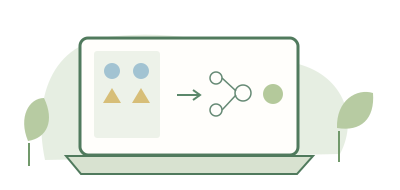
Train the model.
With devices and internet.
- Train a model
- Prompt AI
- Test digital evidence
- Audit training data
A Grades 6–10 journey to understand, use, question, build and evaluate AI — with human judgment at the centre.
Grades 6–10 · Board-aligned · Two delivery modes · Multilingual

Using an AI tool is becoming easy. Understanding how it works, questioning its outputs, applying it well and using it responsibly requires deeper capability.
of workers’ core skills are expected to change by 2030.
WEF · Future of Jobs 2025 ↗of surveyed employers consider analytical thinking essential.
WEF · Future of Jobs 2025 ↗of surveyed U.S. parents feel anxious about their child’s preparation for jobs in an AI-driven economy.
Penn Foster · 506 U.S. parents · Dec 2025 ↗Students can define a concept but not use it.
Subjects feel cut off from the work that uses them.
Reasoning and judgment are rarely taught.
Few students learn to command AI, not follow it.
So what should AI literacy actually build?
Every session turns AI concepts into something students can test, create, discuss, audit and reflect on.
AI curriculum, taught the way the world actually uses AI.
Make an AI prototype.
Ask. Compare. Refine.
Try unfamiliar examples.
Challenge the answer.
Look for bias and gaps.
Turn an idea into an artifact.
Explain what deserves trust.
Application-first · Ethics embedded · Portfolio/project-led · Competency-assessed
NOTCoding bootcamp · Screen-first · Heavy homework · One-off workshop
IT ISApplication-first · Human-centred · Project-based · Layered · Competency-driven
Each grade raises the cognitive bar: from understanding AI to questioning, investigating, creating and evaluating it.

An image classifier
An image classifier
A model and a Prompt Strategy Card
A model and a Prompt Strategy Card
A working prototype and creative-AI brand
A working prototype and creative-AI brand
A chatbot, an AI pipeline and a VR concept
A chatbot, an AI pipeline and a VR concept
An end-to-end AI solution and a real pitch
An end-to-end AI solution and a real pitch
Ethics grows tooRules → Bias → Misinformation → Policy → Governance
Projects, reflections and evidence accumulate across the journey.
Grades 6–10 form the designed pathway. Current pilots begin with focused implementations.
Discover how AI is changing work — and which human abilities remain valuable.
With devices and internet.

Same concept. No device required.
Start focused. Agree the timetable, tools and learning evidence with your program partner.
CURRENT PILOT · ADHYAAPAN-LEDA specialist leads live, with your educator or facilitator present.
FUTURE MODEL · EDUCATOR-LEDEducators deliver with plans, materials and training. Not the current pilot offer.
Grades 6–10 designed pathway; focused pilots first.
10 weekly sessions over approximately 2–3 months; scope agreed with the program partner.
An Adhyaapan specialist, with your educator or facilitator present.
One weekly AI/skill slot or co-curricular module.
No. Tech-enabled and zero-device routes share the learning goal.
Online, in-person or hybrid; regional-language support where required.
Projects, reflection, showcase, practical endline and a pilot report.
Discovery→Orientation→Weekly sessions→Mid-pilot review→Showcase→Pilot report
UNESCO AI Competency Framework · OECD–EC AILit · IBM SkillsBuild · Intel AI for Youth · NEP 2020
Curriculum references, not endorsement or certification.Age-appropriate tools · Educator/class accounts wherever possible · Required consent before student data or media leaves the classroom.
Tool choice, account setup and consent procedures are agreed with the program partner before the pilot.
Use age-appropriate educator or class accounts. Confirm tools and obtain required consent before student data or media leaves the classroom.
Account and consent arrangements require confirmation with the program partner.Start with a focused pilot. See what learners can understand, question, build and explain — then decide what comes next.